Ontario Industrial Freight: Steel, Automotive Parts and Food Products
- MC 1425624 · USDOT 3883624
- Canada and USA lanes
- Hot load and emergency service
- Cambridge, Ontario
Ontario's industrial economy moves a wide mix of freight, and each commodity has different equipment and handling needs. This guide covers three major categories of Ontario industrial freight: steel and metal products, automotive parts and food products, and how to match each to the right truck.
Steel, pipe and metal products
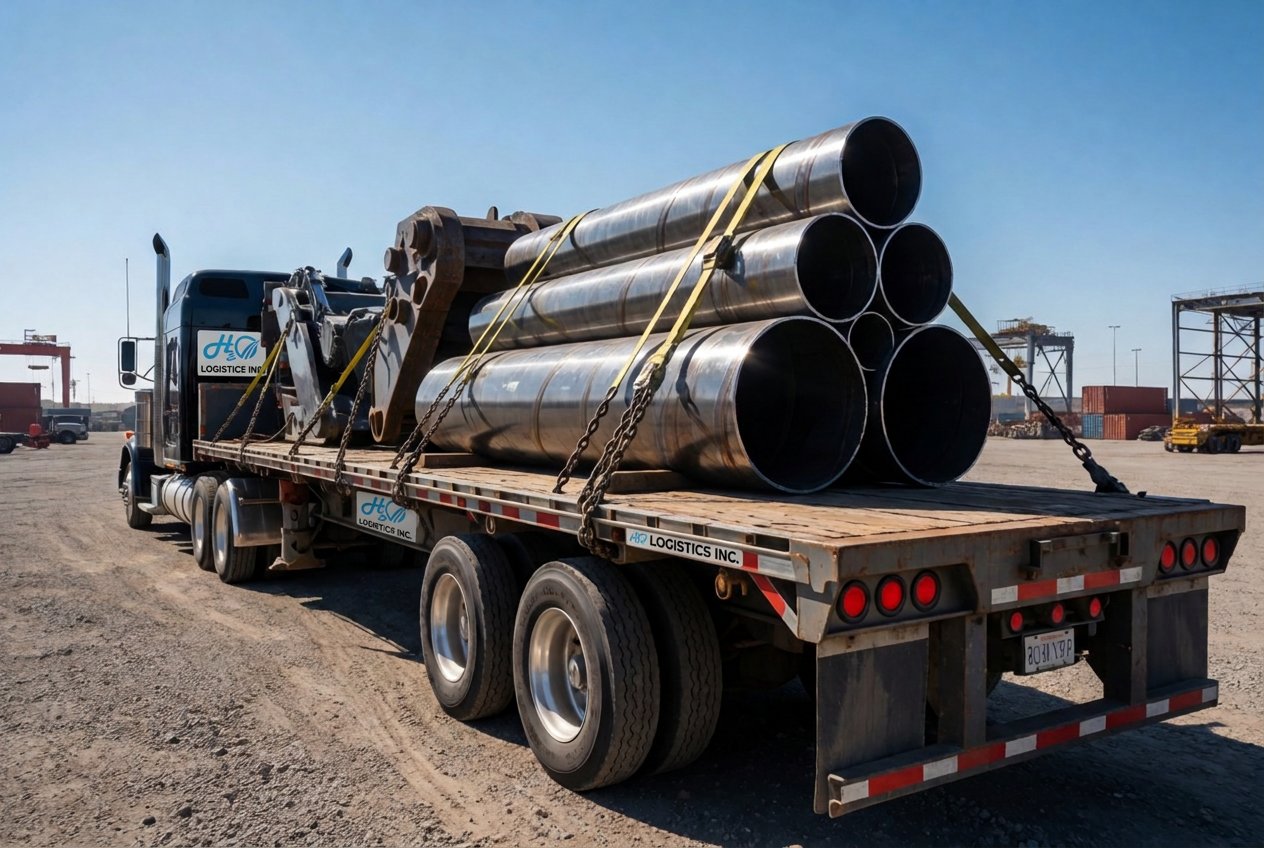
Steel coils, bars, plate, pipe and fabricated metal are heavy and often long. They typically move on open flatbed trailers, and sometimes on Flatbed Conestoga equipment when the product needs protection from the weather. Proper securement matters: chains, straps, dunnage and edge protection must meet cargo securement standards, including Canada's National Safety Code Standard 10 and U.S. FMCSA rules for cross border loads.
Automotive parts and manufactured goods
Automotive and manufacturing supply chains run on tight schedules. Parts are often palletized or racked and moved in dry van trailers. Dependable pickup and delivery times, accurate paperwork and clear communication matter because a late load can stop a line. Hot load capability is valuable here when a shortage appears.
For food, confirm the temperature setpoint and pre-cool requirements in advance.
Food and beverage products
Perishable and temperature-sensitive products move in reefer trailers, which keep freight within a set temperature range. Shippers should confirm the required setpoint, pre-cool the trailer, and make sure the product is loaded at the right temperature. For food moving into the U.S., FDA Prior Notice and sanitary transportation requirements may apply.
Matching freight to equipment
- Steel and pipe: open flatbed, or Conestoga when covered protection is needed.
- Palletized parts and consumer goods: dry van.
- Perishables and temperature-controlled goods: reefer.
- Oversize equipment and machinery: flatbed or lowboy with permits.
Key takeaway: The right trailer, correct securement and accurate paperwork matter as much as the truck itself. Tell your carrier the commodity and handling needs when you request a quote.
Frequently asked questions
What trailer is used for steel from Ontario?
Steel typically moves on open flatbed trailers, or Conestoga trailers when weather protection is needed.
Do you haul automotive parts?
Yes. Automotive and manufacturing freight commonly moves in dry vans, with hot load service available for urgent needs.
Can you haul food products across the border?
Yes, with reefer equipment and the appropriate customs and food-safety paperwork.

A Cambridge, Ontario carrier hauling dry van, reefer, open flatbed and Flatbed Conestoga freight between Canada and the USA. Carrier authority: MC 1425624, USDOT 3883624.
Need a quote or a load moved?
Tell us the lane and we will reply with a quote and your load code.